

Blog Details
Ball Valve vs Gate Valve vs Check Valve: How to Choose the Right Valve for Your Project
By GBT Author • 10/15/2026
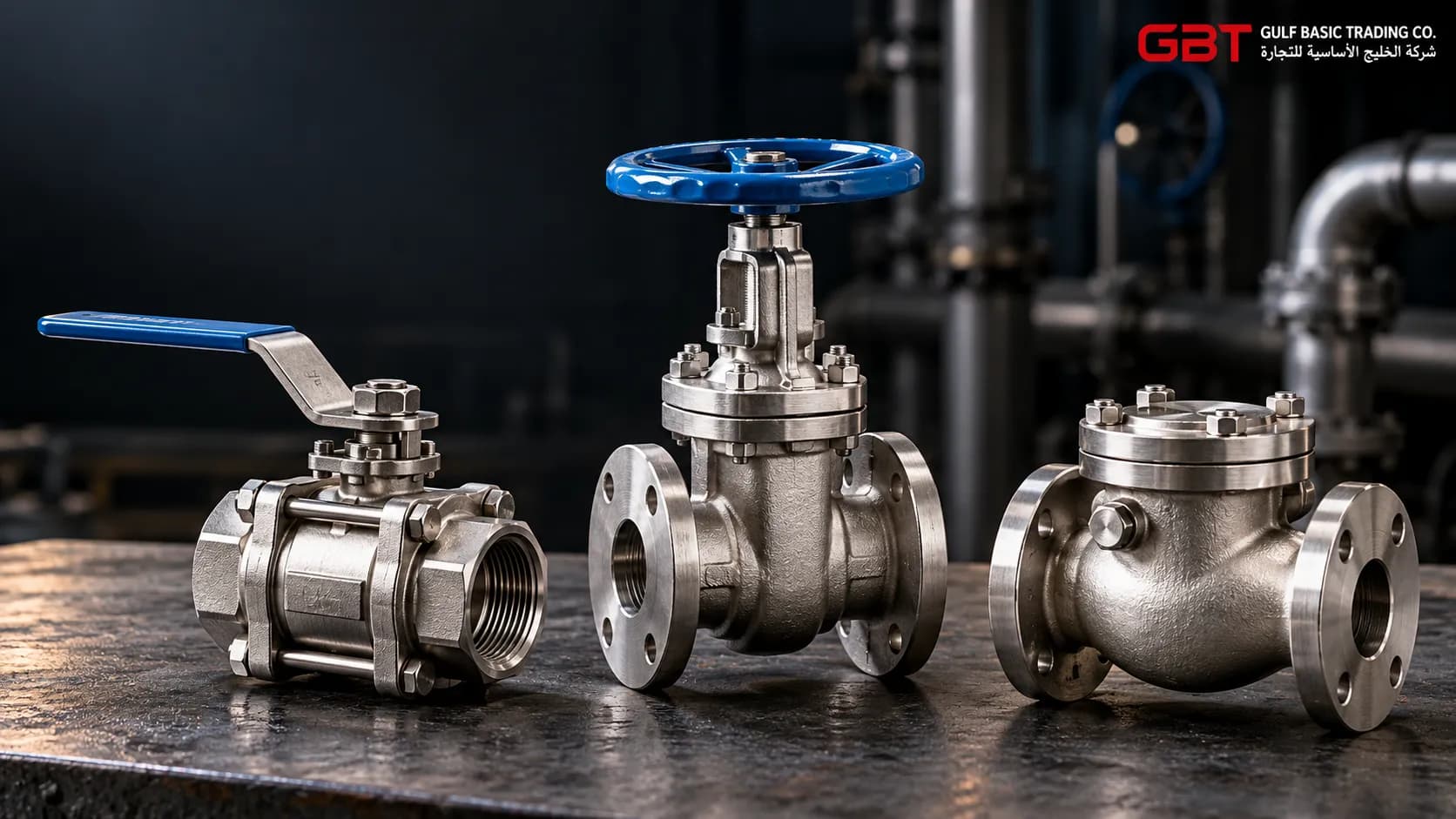
Choosing the right valve is essential for controlling water flow, isolating equipment and protecting piping systems. Although ball valves, gate valves and check valves may appear similar in a plumbing or MEP BOQ, they perform different functions. Understanding how each valve operates helps contractors, engineers and procurement teams select suitable components for residential, commercial and industrial projects in Saudi Arabia.
What Is the Difference Between Ball, Gate and Check Valves?
The main difference is their operating purpose. A ball valve provides quick, quarter-turn shut-off. A gate valve is primarily designed to isolate flow when fully open or fully closed. A check valve allows flow in the intended direction and helps prevent reverse flow automatically.
The correct choice depends on the system's function, operating conditions, material compatibility and project specifications.
1. Ball Valve: For Quick Flow Isolation
A ball valve uses a rotating ball with a bore through its centre. Turning the handle approximately 90 degrees aligns the bore with the pipe to allow flow or positions it across the flow path to close the valve.
Common applications
- Water supply lines in suitable plumbing installations.
- Isolation points around compatible equipment.
- Maintenance sections where quick shut-off is useful.
- Selected commercial and industrial piping applications.
Key advantages
- Quick quarter-turn operation.
- Convenient manual control.
- Many designs provide tight shut-off.
- Full-port models can offer a relatively unrestricted flow path.
What should buyers consider?
Check the valve's pressure and temperature ratings, body and seat materials, connection type and compatibility with the fluid. A standard ball valve should not automatically be treated as suitable for continuous throttling. Partially open operation can damage some seat designs, depending on the service conditions.
2. Gate Valve: For On/Off Isolation
A gate valve uses a gate or wedge that moves into or out of the flow path. Operating the handwheel typically requires multiple turns, making it slower to operate than a quarter-turn ball valve.
Common applications
- Isolation on suitable water distribution lines.
- Sections of piping that require periodic shut-off.
- Selected building services and industrial piping systems.
- Installations where the specified valve design suits the operating conditions.
Key advantages
- A suitable full-open design can provide a relatively straight flow path.
- Useful for isolating sections of a piping system.
- Available in different designs, sizes, materials and pressure ratings.
What should buyers consider?
Gate valves are primarily intended for on/off isolation rather than routine flow regulation. Leaving a conventional gate valve partially open can cause vibration, wear or damage under unsuitable conditions.
Confirm the valve's end connections, dimensions, pressure rating, material, operating clearance and maintenance requirements before procurement.
3. Check Valve: To Help Prevent Reverse Flow
A check valve, also called a non-return valve, is designed to permit flow in one direction and close when reverse-flow conditions occur. Depending on its design, it operates automatically in response to flow and pressure conditions rather than through a conventional handwheel.
Common applications
- Suitable pump discharge arrangements.
- Water distribution systems requiring backflow prevention at a component level.
- Piping systems where reverse flow could affect equipment or operation.
- Selected industrial and commercial fluid-handling installations.
Key advantages
- Helps prevent unwanted reverse flow.
- Can protect compatible equipment against certain reverse-flow conditions.
- Operates automatically when the design and system conditions are appropriate.
What should buyers consider?
Check valve selection requires more than matching the pipe diameter. Flow rate, pressure differential, orientation, closing characteristics and the potential for water hammer must be evaluated. Different designs, including swing, lift and spring-loaded check valves, behave differently.
A check valve is not a substitute for every form of backflow-prevention device required by a project's plumbing or public-health specifications.
Ball Valve vs Gate Valve vs Check Valve: Comparison Table
Use these key differences when comparing the three valve types:
| Feature | Ball valve | Gate valve | Check valve |
|---|---|---|---|
| Primary function | On/off isolation | On/off isolation | Prevent reverse flow |
| Operating method | Usually quarter-turn | Usually multi-turn | Automatic |
| Manual handle or handwheel | Common | Common | Usually not required |
| Flow regulation | Generally not preferred for routine throttling | Not recommended for routine throttling | Not intended for manual regulation |
| Typical use | Quick isolation | Isolation of piping sections | Reverse-flow prevention |
| Main selection concern | Shut-off, materials and ratings | Isolation duty, design and ratings | Flow conditions and closing behaviour |
These are general characteristics. The actual performance of a valve depends on its design, materials, size and manufacturer specifications.
How to Choose the Right Valve for Your Project
Use the following decision process before finalising the valve schedule or BOQ.
Step 1: Define the required function
Start by asking what the valve must do.
- Need a quick manual shut-off? Evaluate a suitable ball valve.
- Need to isolate a piping section? Evaluate a suitable gate valve or another specified isolation valve.
- Need to limit reverse flow? Evaluate a suitable check valve.
Do not choose a valve simply because it is commonly used on another project.
Step 2: Confirm operating conditions
Document the fluid, operating pressure, temperature, expected flow and relevant operating conditions. These details affect the suitability of the valve body, seals, internal components and overall design.
Step 3: Check materials and connections
Confirm the required body material, seat or seal material, nominal size, connection type and pressure rating. Ensure the valve is compatible with the pipe material and the intended service.
Step 4: Review project specifications
Check the approved drawings, valve schedule, technical submittals and applicable project requirements. If a specified product is unavailable, obtain the required technical review and approval before proposing an alternative.
Step 5: Plan access and maintenance
Consider handle clearance, installation orientation, access for inspection and the space needed for replacement. For check valves, confirm that the installation follows the manufacturer's flow-direction marking and orientation requirements.
Valve Procurement BOQ Checklist
Before requesting a quotation, make sure the BOQ or RFQ identifies:
- Valve type and intended function.
- Nominal size and connection standard.
- Required body, trim, seat and seal materials.
- Operating pressure and temperature.
- Fluid or service application.
- Required pressure rating and applicable specifications.
- Quantity and any required accessories.
- Technical datasheets, certificates and submittals, where specified.
- Delivery location and required delivery schedule.
A clear BOQ makes it easier to compare technically equivalent quotations and reduces the risk of ordering an unsuitable valve.
Common Valve Selection Mistakes to Avoid
Choosing by price alone: A cheaper valve may not meet the specified material, pressure, temperature or service requirements.
Using the wrong valve function: A check valve does not replace a manual isolation valve, and a conventional ball or gate valve does not automatically prevent reverse flow.
Ignoring material compatibility: Valve bodies and sealing components must be suitable for the fluid and operating environment.
Overlooking installation requirements: Incorrect flow direction, insufficient operating clearance or unsuitable orientation can affect installation and performance.
Assuming all valves of the same size are equivalent: Design, pressure rating, connection dimensions and internal components can differ. Compare technical specifications, not just nominal size.
Sourcing Plumbing Valves for Projects in Saudi Arabia
Contractors, MEP teams and procurement professionals should verify product suitability before purchasing valves for projects in Riyadh, Dammam, Jubail, Jeddah and other locations across Saudi Arabia.
Gulf Basic Trading lists several relevant plumbing products, including Ball Valves, Gate Valves and Non-Return Check Valves.
Review the relevant product information and share your BOQ, required specifications, quantities and delivery location when enquiring about supply. Final product selection should follow the approved project requirements and manufacturer documentation.
Frequently Asked Questions
Which is better: a ball valve or a gate valve?
Neither is universally better. Ball valves are useful for quick quarter-turn isolation, while gate valves are commonly used for on/off isolation where their design suits the application. Selection depends on the system requirements and specified valve characteristics.
Can a gate valve be used to control flow?
A conventional gate valve is primarily designed for fully open or fully closed operation. Routine throttling can cause vibration, erosion or damage under unsuitable conditions. Use a valve designed for regulation when flow control is required.
What is the main purpose of a check valve?
A check valve allows flow in the intended direction and helps prevent reverse flow automatically. Its suitability depends on the system's flow, pressure and installation conditions.
Does a check valve need a handle?
Most conventional check valves operate automatically and do not require a manual handle. The internal mechanism responds to flow and pressure conditions, with operation varying by valve design.
What information is required to order a valve?
Provide the valve type, nominal size, connection, materials, pressure and temperature requirements, intended service, quantity and relevant project specifications. Include technical submittal requirements and delivery details where applicable.
Where can I enquire about plumbing valves in Saudi Arabia?
You can review the relevant plumbing products listed by Gulf Basic Trading and submit an enquiry with your project requirements. Confirm product specifications and availability before placing an order.
Final Thoughts
Choosing the right valve depends on its intended function, operating conditions and technical specifications. For Saudi projects, verifying material compatibility and BOQ requirements helps reduce selection errors and improve procurement efficiency.
Call Us Now !
Drop Us a Line