

Blog Details
Cable Management Systems in Saudi Arabia: How to Choose Between Cable Tray, Cable Ladder and Cable Trunking
By GBT Author • 10/6/2026
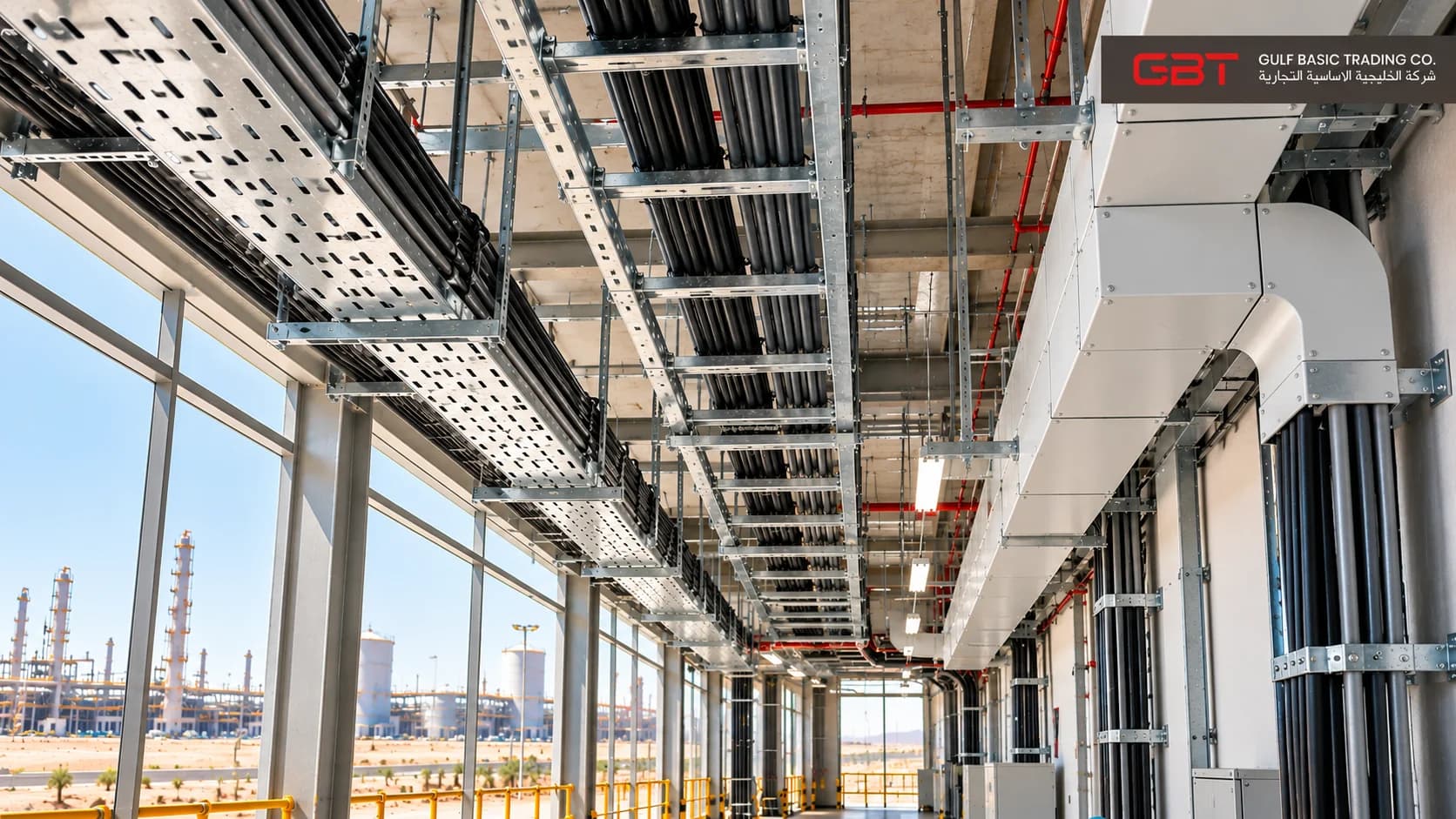
Choosing between cable tray, cable ladder and cable trunking affects safety, cost and long-term maintenance. This guide explains the differences and how to choose for projects across Saudi Arabia, from Riyadh to Jeddah and Dammam.
1. What Are Cable Management Systems?
Cable management systems organise, support and protect electrical and data cables. They keep installations safe, tidy and easy to maintain, and they reduce the risk of damage, overheating and untidy wiring on any project.
2. Why Are Cable Management Systems Important in Saudi Arabia?
Industrial and commercial projects in the Kingdom need dependable cable routing, often in demanding conditions. A good system:
- Withstands high-temperature environments
- Provides organised cable routing and support
- Keeps cables accessible for maintenance
- Gives organised routing
- Leaves room for future expansion
3. What Is a Cable Tray?
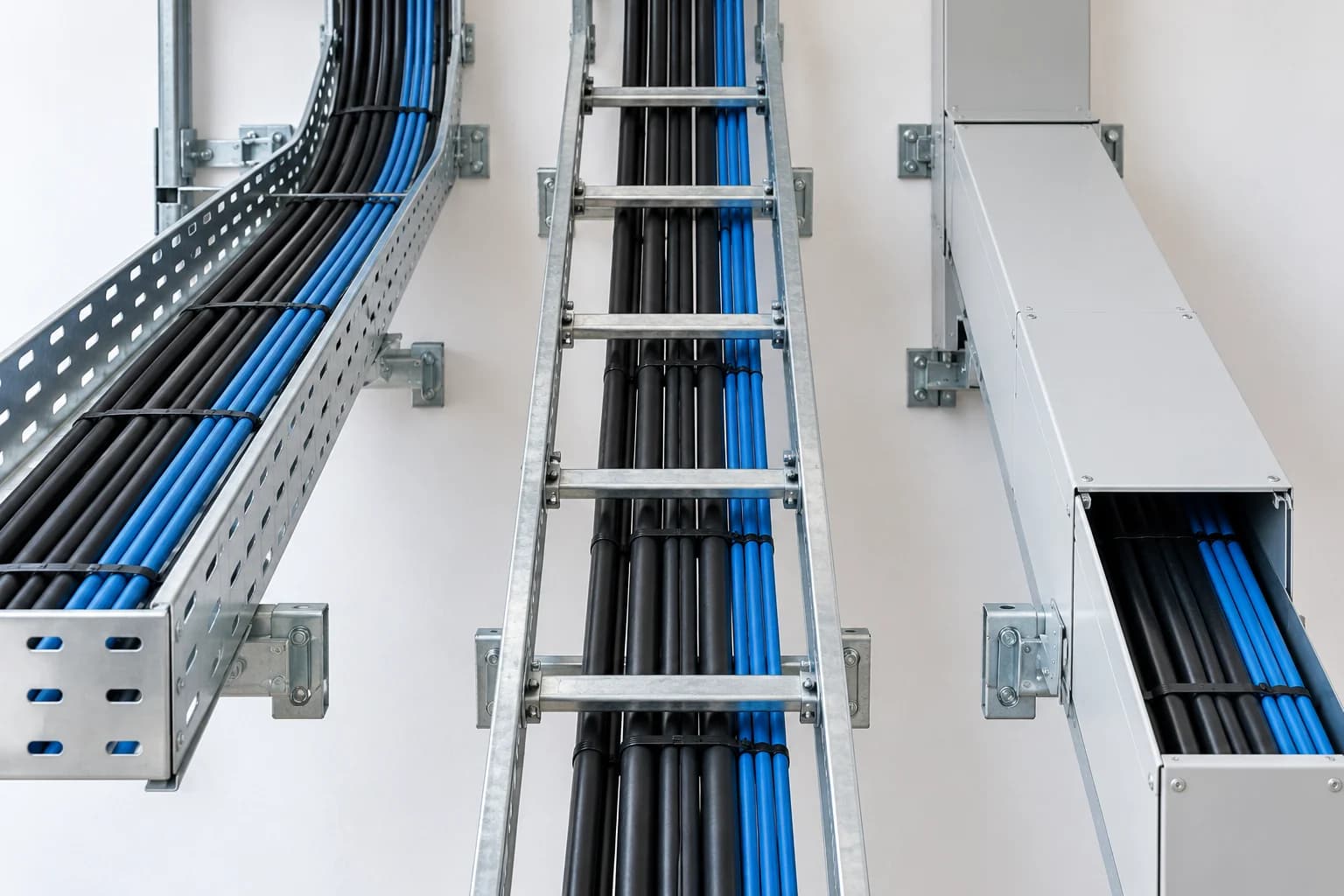
A cable tray is an open, perforated or solid-bottom channel that supports cables. Its open design gives good ventilation and easy inspection, making it ideal for power, control and data cables in offices, plants and commercial buildings. It is also quick to install and simple to modify.
4. What Is a Cable Ladder?
A cable ladder has two side rails joined by rungs. This strong construction carries heavy cables over long spans, so it is widely used in industrial plants, substations and infrastructure projects. The open rungs also allow air flow and make cable fixing easy.
5. What Is Cable Trunking?
Cable trunking is an enclosed, covered channel. It shields cables from dust and accidental contact and gives a neat finish for visible routes in offices, shops and workshops. Removable covers allow access when cables need to be added or checked.
6. Cable Tray vs Cable Ladder vs Cable Trunking: Key Differences
The table below summarises how the three systems compare.
| Feature | Cable Tray | Cable Ladder | Cable Trunking |
|---|---|---|---|
| Design | Perforated or solid base | Side rails with rungs | Enclosed channel with cover |
| Cable support | Depends on system design | Suitable for many heavy-duty applications | Depends on system design |
| Ventilation | Generally good | Generally very good | More limited |
| Cable protection | Open system | Open system | Enclosed system |
| Accessibility | Easy | Easy | Requires cover removal |
| Typical applications | Commercial, industrial, MEP | Industrial, power, infrastructure | Commercial, indoor, enclosed routes |
7. How to Choose the Right Cable Management System
Match the system to the job by checking these factors:
- Cable weight, number and size
- Heat dissipation
- Installation environment
- Mechanical protection
- Maintenance requirements
- Available space
- Future expansion
- Project specifications
Start with cable load, quantity, installation environment and project requirements, then evaluate ventilation, protection, maintenance and future expansion.
8. Which Cable Management System Is Best for Industrial Projects?
For industrial projects, cable ladder is often considered for power cables and routes requiring substantial cable support or longer spans, subject to the system's load rating and support arrangement. Cable tray can be suitable for power, control, instrumentation and data cables where open routing and accessibility are beneficial. Cable trunking is useful where cables require an enclosed routing system and additional protection. Large industrial projects may use a combination of all three.
9. Cable Management Systems for Commercial and Construction Projects
Offices, shopping centres and commercial buildings use tray and trunking for neat MEP installations. Construction and infrastructure projects typically use ladder and tray for main routes, with trunking for final distribution to rooms and equipment.
10. Common Cable Management Mistakes to Avoid
- Overloading cable supports
- Poor routing
- Insufficient support
- Ignoring heat dissipation
- Inadequate environmental protection
- Not allowing room for future cables
- Choosing only based on price
11. Cable Management Systems in Saudi Arabia: What Should Projects Consider?
Saudi projects may require cable management systems to operate in high, dusty environments and, in coastal areas, conditions with increased humidity and corrosion exposure. Selection should therefore consider the installation location, ambient conditions, corrosion exposure, material and finish, load requirements, maintenance access and project specifications.
Galvanised or stainless-steel systems may be appropriate for certain corrosive environments, but the final material and finish should always be selected according to the project specification and manufacturer requirements.
FAQ
What is the difference between cable tray and cable ladder?
A cable tray generally has a continuous base, while a cable ladder consists of side rails connected by rungs. Cable ladders are often considered for applications requiring substantial cable support or longer spans, subject to the system's load rating and support arrangement.
When should cable trunking be used?
Use it where cables need enclosed protection and a neat finish, such as offices, shops and control rooms.
Which is better for heavy cables in Saudi industrial projects?
Cable ladder is often suitable for heavy power cables and longer cable routes because of its structural design and accessibility. However, the final selection should be based on the required load rating, cable arrangement, support spacing, span and project specifications.
Which system suits Saudi Arabia's hot climate?
Open cable tray and ladder systems can provide good airflow around cables, which may be beneficial where heat dissipation is a consideration. However, cable selection, spacing, ambient temperature, loading and installation conditions also affect operating temperature. The system should be selected according to the project design and applicable requirements.
How do I choose the right system in KSA?
Match load, environment, protection, maintenance needs and project specifications.
Are cable trays suitable for industrial projects in Saudi Arabia?
Yes, with the right material, finish and load rating.
Where can I buy cable management systems in Saudi Arabia?
Look for suppliers with a clear product range, quality documentation and reliable delivery across the Kingdom.
Final Thoughts
Cable tray offers ventilation and flexibility, cable ladder handles heavy loads over long spans, and trunking provides enclosed protection. The right choice depends on load, environment and project needs.
In a region of extreme heat and demanding projects, cable management is not an afterthought. Plan for load, heat and future expansion early, and select materials and systems appropriate to the project requirements to help reduce maintenance issues and potential downtime.
To explore suitable options for your project, visit GBT's Cable Management Systems category and speak with the team.
Call Us Now !
Drop Us a Line