
Blog Details
Green Building Materials in Saudi Arabia – What Vision 2030 Projects Are Specifying in 2026
By GBT Author • 5/23/2026
Green Building Materials in Saudi Arabia – What Vision 2030 Projects Are Specifying in 2026
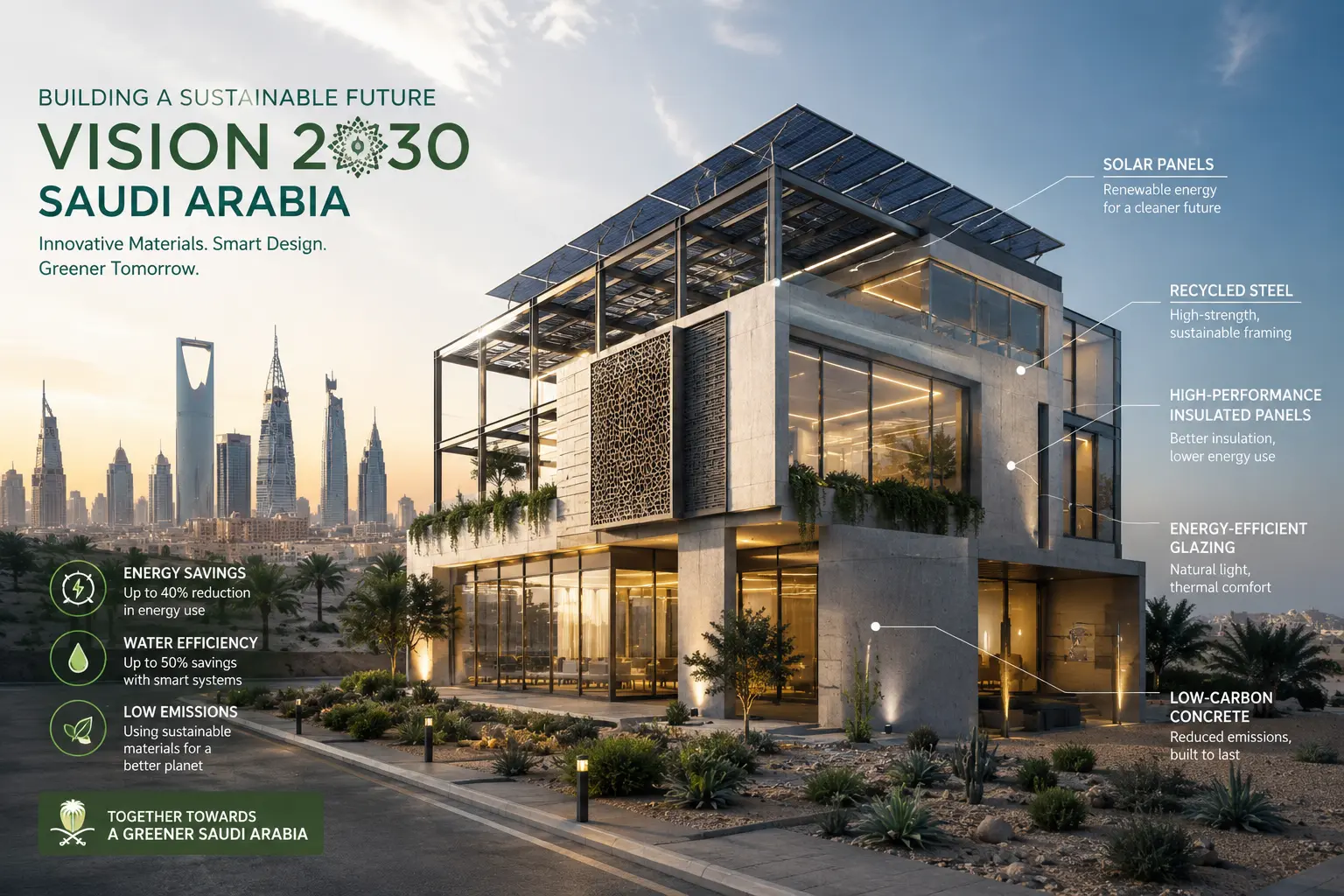
Green building materials used in Saudi Arabia’s Vision 2030 projects in 2026 now go far beyond a few “eco” options. They include low‑carbon concrete, recycled steel, high‑performance insulation, energy‑efficient lighting, water‑saving plumbing systems and low‑VOC installation products, all working together to cut energy use and support buildings that perform better for many years.
Saudi Arabia’s Vision 2030 is no longer just about iconic skylines and giga‑projects; it is also about how sustainably those buildings are designed, built and operated. By 2026, consultants and contractors working on projects in Riyadh, NEOM, the Red Sea, Diriyah and Qiddiya are being pushed to choose greener materials that reduce energy use, cut carbon and extend building lifecycles.
For suppliers, this shift changes the question from “What is available?” to “Which material will pass the new green codes and still perform on site?” In this guide, we look at the key green building materials that Vision 2030 projects are specifying in 2026 – and what that means for material selection in the Saudi market.
1. Low-carbon and performance-oriented concrete systems
Concrete is still the backbone of Saudi construction, but traditional Portland cement mixes are under scrutiny for their high embodied carbon. Vision 2030-aligned projects increasingly specify:
- Low-carbon concrete mixes that reduce cement content and incorporate supplementary materials such as fly ash, slag or advanced admixtures.
- High-performance ready-mix solutions with better durability, which reduce maintenance and lifecycle costs.
For suppliers of rebar, formwork systems, anchors and fixings, this means working with concrete producers that can provide documentation on carbon intensity and performance certificates that align with the new green requirements.
2. Recycled and high-efficiency steel products
Steel remains critical for structural frames, lintels, block reinforcement and cladding support systems. In 2026, specifications on Vision 2030 projects more often call for:
- Recycled or high-strength steel that achieves the same structural performance with less material.
- Optimised cable ladders, trays and support systems designed to reduce weight while maintaining load capacity.
This shift benefits suppliers who can offer certified steel products with traceable origin, environmental declarations and compatibility with modern façade and MEP designs.
3. High-performance insulation and façade systems
With summer temperatures frequently exceeding 45–50°C, cooling loads are a major driver of building energy use in Saudi Arabia. The Saudi Green Construction Code and energy codes now push designers toward:
- High-R-value insulation systems in walls, roofs and façades.
- Advanced cladding fixation systems that support insulated panels and ventilated façades without thermal bridging.
- Energy-efficient windows and glazing with low U-values and solar control coatings.
For suppliers, this means more demand for compatible accessories: anchor bolts, cladding brackets, expanded metal mesh, sealants and tapes that maintain airtightness and thermal performance across the envelope.
4. Energy-efficient electrical and lighting solutions
Vision 2030 projects are under pressure to reduce operational energy consumption across commercial, residential and hospitality assets. Within electrical and lighting packages, this is visible in specifications such as:
- LED bulbs, tube lights and panel lights instead of legacy lamps.
- Industrial flood lights and outdoor lighting with high efficacy (lumens per watt) and smart control options.
- Efficient distribution boards, breakers and protection devices that support smart metering and energy monitoring.
Electrical suppliers that can bundle cables, conduits, protective devices and LED luminaires with the right certifications are better positioned to serve Vision 2030-aligned projects.
5. Water-efficient plumbing & fixture selections
Water scarcity is another driver behind Saudi Arabia’s sustainability agenda. Across mixed-use, hospitality and residential projects, consultants now prioritise:
- Efficient valves and fittings that reduce leaks and pressure losses.
- Modern basin mixers and fixtures designed for lower flow rates without compromising user comfort.
- Well-designed drainage systems that minimise blockages and resist corrosion for longer lifespans.
These choices reduce water consumption, pumping energy and maintenance – all important metrics for long-term asset performance.
6. Safer, lower-impact consumables and installation materials
Green building is not only about big materials like concrete and steel; it also extends to the “small” items that appear on almost every BOQ. In 2026, specifications are increasingly sensitive to:
- Sealants and adhesives (silicone, PU, epoxy, construction glue) with low VOC content and better durability.
- Tapes, wraps and insulation materials that support airtightness and fire safety requirements.
- Corrosion-resistant fasteners, anchors and supports that extend the life of installed systems.
Contractors who align their selection of screws, bolts, anchors, pipe supports and cable management accessories with these criteria are better positioned to pass inspections and warranty reviews.
What this means for suppliers and contractors in 2026
For contractors in Riyadh, Dammam, Jubail and other development hubs, the message is clear: “green” is no longer optional or limited to flagship giga-projects – it is becoming the baseline expectation across new developments.
For suppliers like Gulf Basic Trading, that means:
- Sourcing building and MEP materials that meet updated Saudi and international standards.
- Providing documentation and technical data to support design approvals and inspections.
- Helping project teams choose products that balance sustainability, safety, availability and lifecycle cost.
FAQs
What are green building materials?
Green building materials are products designed to be kinder to the environment. They use fewer resources, create less pollution and often last longer than traditional options.
Why are Vision 2030 projects focusing on sustainability?
Vision 2030 is pushing Saudi Arabia to build cities that are modern, efficient and better for the environment. That means new projects are expected to save energy and water, which starts with choosing more sustainable materials.
What insulation materials are commonly used in Saudi Arabia?
On Saudi projects, you’ll often see high-performance wall and roof insulation such as mineral wool, rigid boards and advanced foam systems. The goal is simple: keep buildings cooler and reduce the load on air-conditioning.
What is low-carbon concrete?
Low-carbon concrete is concrete made with less traditional cement and more supplementary materials like fly ash or slag. It still delivers the strength engineers need but with a lower carbon footprint.
How do sustainable materials reduce lifecycle cost?
Sustainable materials can cut costs over time because they’re more durable and help buildings use less energy and water. You may pay a bit more upfront, but you save on repairs, replacements and utility bills later.
Are green building materials mandatory in Saudi Arabia?
Saudi Arabia is tightening its building and energy codes, especially on Vision 2030 projects. Not every product must be “green,” but many new developments now require materials that meet higher efficiency and sustainability standards.
As Vision 2030 continues to shape the Kingdom’s built environment, the projects that succeed will be those that treat green building materials as a core requirement, not an optional upgrade. Choosing the right suppliers – and the right materials – is now a strategic decision for every development.
Call Us Now !
Drop Us a Line