
Blog Details
How Companies in Saudi Arabia Can Improve PPE Compliance Among Employees
By GBT Author • 7/27/2026
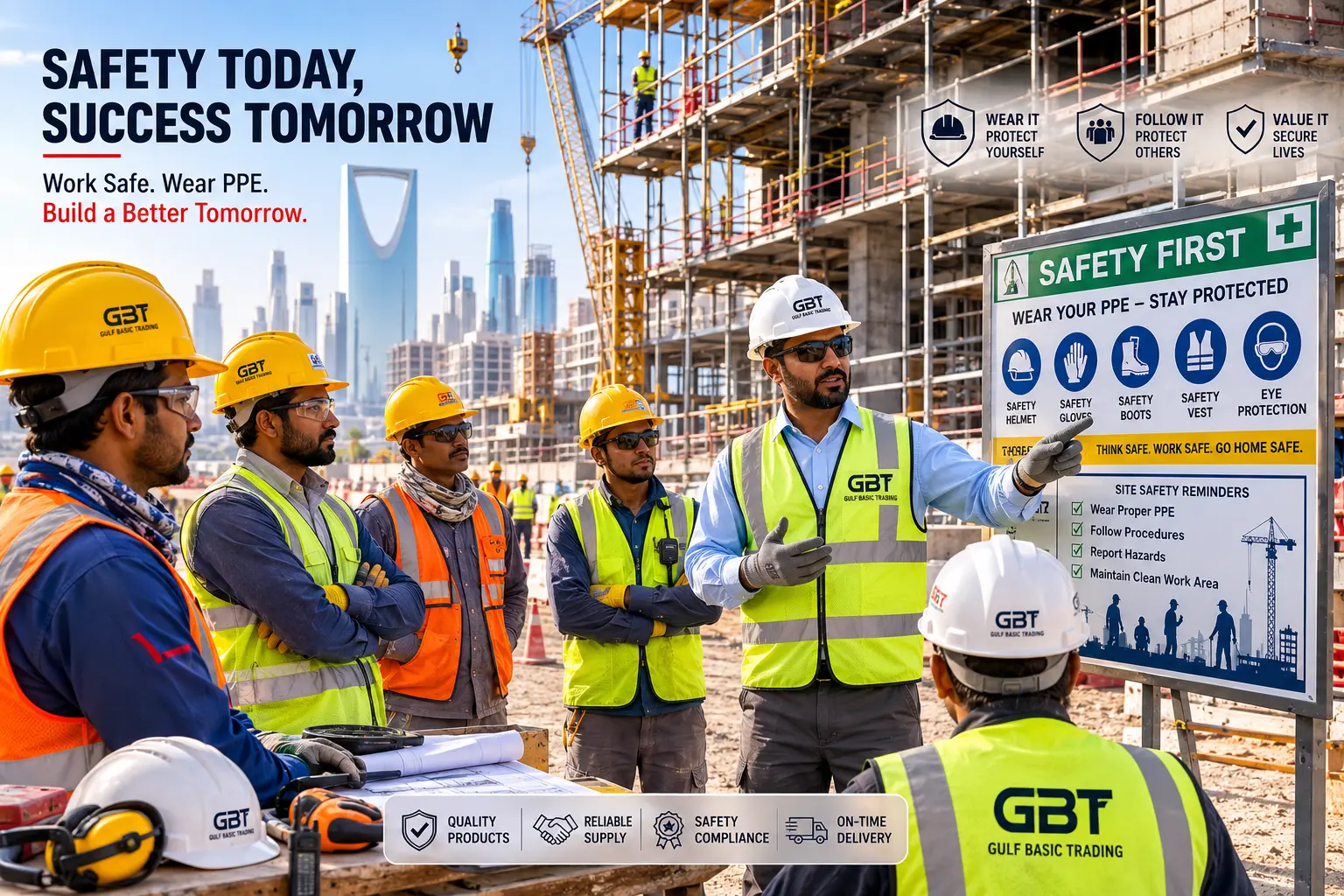
On construction sites, industrial plants, and logistics hubs across Saudi Arabia, Personal Protective Equipment (PPE) compliance is one of the clearest signs of how seriously a company takes worker safety. In Riyadh, Jeddah, Dammam, Jubail, and other cities, a missing helmet, vest, glove, or harness can turn a routine task into a serious incident within seconds. Improving PPE use is not just about avoiding fines; it is about protecting people in extreme heat, high-risk areas, and busy project environments.
This blog looks at why employees sometimes ignore PPE rules, and practical steps Saudi employers can take to build more consistent, realistic compliance.
Understand why workers skip PPE
Employees rarely ignore PPE just to be difficult. Most of the time, there are understandable reasons:
- Comfort in high temperatures - Heavy, non-breathable gear feels unbearable during hot Saudi summers. Workers may quietly stop using it to cope with heat.
- Poor fit or quality - Helmets that slip, gloves that tear easily, or vests that restrict movement do not feel worth the effort.
- Lack of clear explanation - If people do not understand why PPE matters for their specific job, rules can feel like unnecessary pressure.
- Inconsistent enforcement - When supervisors ignore PPE rules some days and enforce them hard on others, employees stop taking them seriously.
The first step in improving compliance is listening to these reasons and addressing them honestly instead of treating non-compliance as pure stubbornness.
Choose PPE that matches Saudi conditions
In Saudi Arabia, PPE has to work in high temperatures, strong sun, dust, and sometimes confined or noisy spaces. If equipment is chosen only by price, with no thought for comfort or local environment, workers will find ways to avoid wearing it.
Better choices include:
- Lightweight, breathable helmets, vests, and clothing suitable for hot weather.
- High-visibility gear that is comfortable enough for long shifts.
- Gloves, eyewear, and masks that balance protection with usability.
PPE selection should also consider the site's hazard assessment, including risks from falling objects, electrical work, chemicals, noise, dust, and working at height.
Companies that source PPE through partners who understand both international standards and Saudi conditions can give workers equipment they are more willing to use every day.
Make PPE part of everyday training, not just induction
Safety inductions are important, but workers often forget what was said after a few weeks on site. PPE rules need regular reinforcement.
Practical steps:
- Short toolbox talks focused on specific tasks and the PPE they require.
- Simple demonstrations showing what can go wrong without protection.
- Clear explanations of company policy and legal requirements in KSA, including midday work ban and PPE obligations for employers.
When PPE is discussed in concrete, job-specific terms, it feels more relevant than generic safety slides.
Lead by example on site
Compliance improves when supervisors, engineers, and managers follow the same PPE rules they expect from workers. If team leaders walk into active areas without helmets or vests, employees receive a strong message that the rules are flexible.
Better leadership practices:
- Supervisors and foremen always wearing required gear in designated zones.
- Stopping work politely but firmly when PPE is missing.
- Showing that PPE is non-negotiable for everyone, not just junior staff.
Visible consistency builds trust and reduces arguments about "who really needs to wear what."
Make PPE easy to access and replace
Even motivated workers struggle to comply if PPE is hard to find or slow to replace.
Companies can:
- Keep PPE stations at entry points, near high‑risk work areas, and in site offices.
- Ensure spares are available for visitors, subcontractors, and new workers.
- Replace damaged or worn PPE quickly without complicated approvals.
Having a reliable supply chain for helmets, vests, gloves, masks, and other equipment–through distributors who understand industrial and construction needs in KSA–removes one of the main excuses for non‑compliance.
Link PPE compliance to realistic incentives and feedback
Punishment alone rarely builds lasting compliance. Workers respond better to clear expectations, fair reminders, and occasional recognition.
Useful approaches:
- Simple KPI tracking for PPE use in high-risk zones.
- Positive recognition for crews that consistently follow rules.
- Honest conversations when people struggle with comfort, heat, or fit, followed by improvements in equipment rather than only warnings.
This makes PPE feel like part of a shared safety culture, not just a checklist.
Choosing the Right PPE Supplier in Saudi Arabia
Companies in Saudi Arabia do not just need PPE rules; they need PPE that workers can actually use in hot, demanding environments. Suppliers who carry a wide range of safety gear–helmets, vests, gloves, masks, eyewear, harnesses, and heat-stress products–can support HSE teams in building a consistent, practical PPE programme suited to local projects and climates.
With trustworthy equipment and steady availability, employers can focus on training, supervision, and culture, instead of constantly fighting stock shortages or poor‑quality gear.
FAQs
Why is PPE compliance such a challenge in Saudi Arabia?
Extreme heat, discomfort, poor equipment fit, and inconsistent enforcement all make it harder for workers to follow PPE rules every day.
How can employers improve PPE use on construction sites?
They can choose PPE suited to Saudi conditions, reinforce rules through regular training, lead by example, and make equipment easy to access and replace.
Does local regulation require PPE for outdoor workers?
Yes. Saudi workplace safety rules and technical regulations require employers to provide appropriate PPE and can impose penalties for non‑compliance.
What kind of PPE works best in hot climates?
Lightweight, breathable, bright‑coloured PPE designed for high temperatures helps workers stay protected without overheating.
How can companies track PPE compliance?
They can use simple observation checklists, site inspections, and KPIs tied to high‑risk areas, combined with regular feedback to crews.
How do reliable PPE suppliers support better compliance?
By supplying comfortable, standards‑compliant equipment in the right quantities, they make it easier for companies to maintain steady PPE availability and respond quickly when replacements are needed.
Call Us Now !
Drop Us a Line