

Blog Details
How to Choose the Right Power Tools for Construction Projects in Saudi Arabia
By GBT Author • 8/31/2026
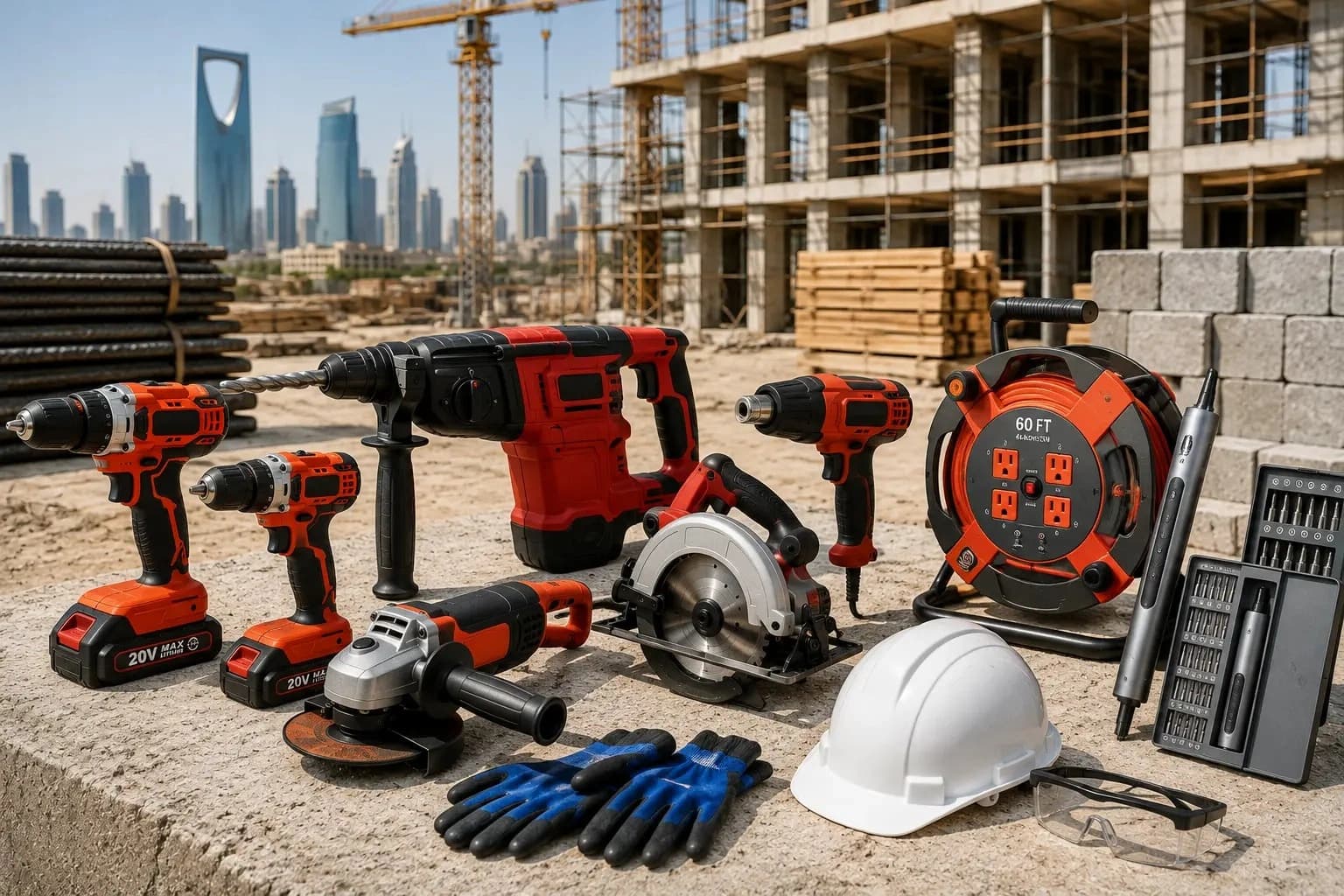
Walk onto any construction site in Saudi Arabia from Riyadh to Jubail and you'll see crews relying on drills, grinders, hammers, and saws. Choosing the wrong power tools doesn't just slow work down. It increases wear, raises safety risks, and costs more long-term through repairs or replacement.
What Are Power Tools?
Power tools are electrically or mechanically powered devices that speed up construction work by drilling, cutting, grinding, fastening, or demolishing materials. They run on electricity (corded or battery), compressed air, or fuel. On a job site, they range from compact cordless drills to heavy demolition hammers.
Why Choosing the Right Tool Matters
Picking the correct tool isn't just about getting the job done. It's about doing it safely, efficiently, and cost-effectively. The wrong tool leads to slower progress, increased wear, higher safety risks, inconsistent quality, and higher long-term costs from frequent repairs.
Types of Power Tools Used in Construction
Common power tools used across construction projects include:
- Industrial Drilling Machines: High-performance drills for wood, metal, and masonry, handling everything from fixture installation to structural drilling.
- Heavy-Duty Hammer Drill: Powerful drills with multiple modes for efficient drilling into cured concrete and stone, combining rotation with hammering action.
- High-Performance Angle Grinder: Versatile grinders for cutting, grinding, and polishing across metal, concrete, and tile.
- Precision Cutting Machine: High-accuracy cutting machinery for clean processing of metal, rebar, and pipe.
- Professional Heat Gun: Durable heat guns with adjustable temperature controls for paint removal and shrink-wrapping.
- Electric Screwdrivers (Cordless): Compact tools for quick, efficient fastening where mobility matters more than raw torque.
- Industrial Extension Boards: Heavy-duty extension boards with multiple sockets and surge protection for on-site power management.
How to Choose the Right Power Tool
Tool selection should be built around actual workload, not a generic list. Here's the framework:
1. Consider the Application
Start with the specific task: drilling, cutting, grinding, fastening, or demolition. The application determines the tool category before brand or price.
2. Choose the Right Power Source
Cordless tools offer mobility for tasks spread across a site without easy power access. Corded tools provide sustained power for continuous, heavy-duty work. Site layout should guide this decision.
3. Assess Power and Performance
Match motor power, torque, and speed to the material. Underpowered tools wear out faster; overpowered tools add unnecessary cost and weight.
4. Consider Durability
Construction tools in Saudi Arabia face heat, dust, and heavy daily use. Look for build quality rated for continuous industrial use, not light or occasional-use tools.
5. Check Safety Features
Features like anti-kickback protection, vibration reduction, safety clutches, and dust extraction reduce operator risk and should be standard, not optional.
6. Consider Ergonomics
Tools used for extended shifts should minimize fatigue through weight balance, grip design, and vibration control. Comfort affects productivity and operator health.
7. Check Spare Parts Availability
Confirm that spare parts such as brushes, chucks, and blades are readily available locally before committing to a tool line.
8. Consider After-Sales Support
Downtime is costly. Reliable after-sales support and servicing access are as important as specifications, especially for teams running tools daily.
Saudi Arabia's Construction Environment
Sites across the Kingdom deal with high temperatures, fine dust, and long working hours, putting extra stress on tools. Heat affects battery performance and motor life, while dust ingress causes premature failure if seals aren't built for the environment. Prioritize dust resistance, thermal tolerance, and build quality suited to continuous industrial use.
Common Mistakes When Buying
- Choosing based on price alone without checking durability
- Buying cordless tools for heavy-duty tasks better suited to corded power
- Ignoring spare parts availability until breakdown
- Overlooking ergonomics for tools used across long shifts
- Not matching tool power to actual material and workload
Why Buy from a Reliable Saudi Supplier?
Buying from a trusted local supplier reduces risks: limited spare parts access, no after-sales support, and uncertain build quality for Saudi job sites. Gulf Basic Trading supplies industrial and construction tools across Saudi Arabia, helping teams source power tools suited to real site conditions. Working with a supplier that understands local conditions makes it easier to standardize tooling and keep parts close at hand.
FAQ
What are the most commonly used power tools?
Drills, angle grinders, impact wrenches, circular saws, and rotary hammers cover drilling, cutting, fastening, and concrete work.
Corded or cordless?
Cordless offers mobility; corded provides sustained power for continuous heavy-duty tasks.
What about the Saudi climate?
Consider high temperatures, dust, operating hours, battery performance, durability, and maintenance. Choose tools with dust protection and thermal tolerance, plus proper spare parts and after-sales support.
How do I choose?
Start with the application, then evaluate the power source, performance, durability, safety, ergonomics, spare parts, and after-sales support.
Where to buy?
Source from established suppliers like Gulf Basic Trading across the Kingdom.
Final Thoughts
Choosing the right power tool means matching application, workload, and site conditions, not price or habit. Contractors who factor in durability, safety, spare parts, and support avoid far more downtime.
Call Us Now !
Drop Us a Line