

Blog Details
Reducing Electrical Installation Errors for Contractors in Saudi Arabia
By GBT Author • 7/13/2026
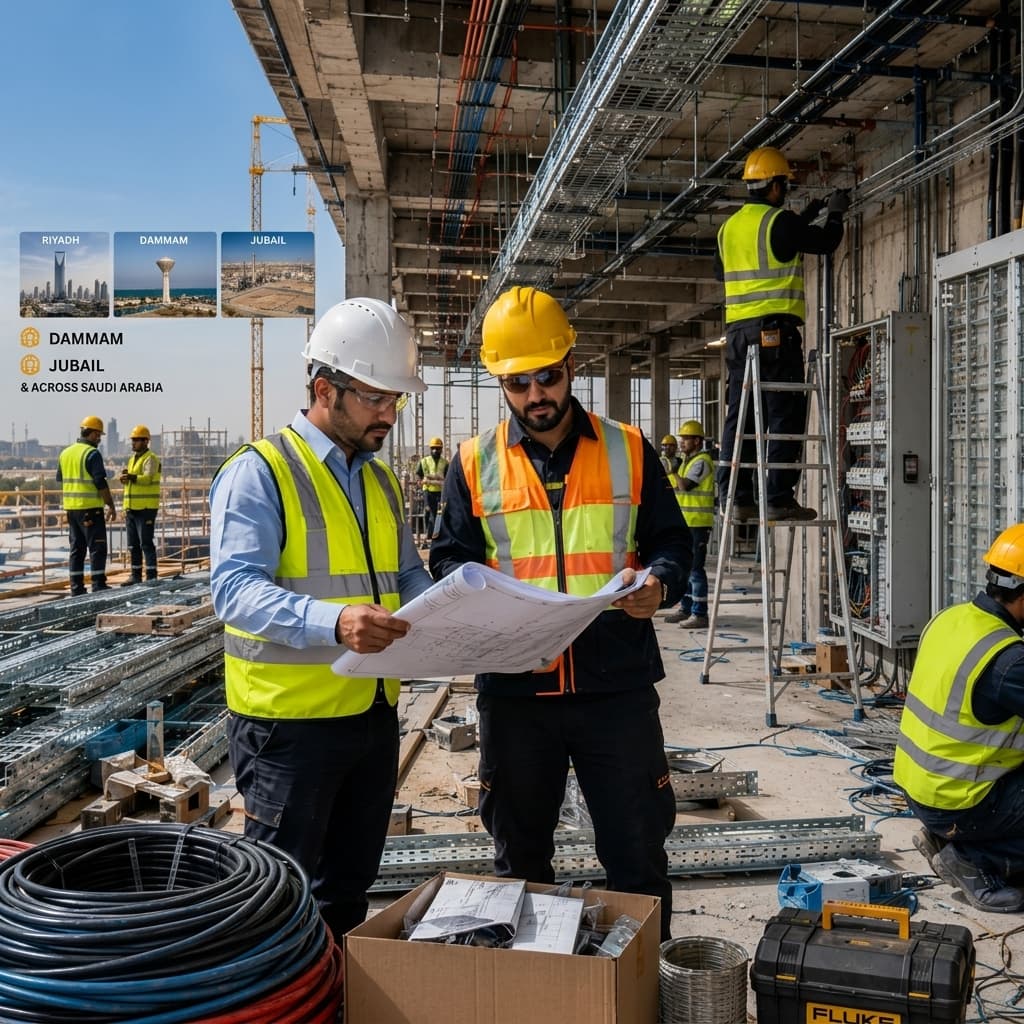
Electrical errors on site cost money. They result in rework, delays, safety risks and sometimes damage to electrical equipment and finished interior spaces. In Saudi Arabia, where many projects are on tight programmes with huge electrical loads, a few small errors in the installation can quickly snowball into major snags.
The good news: most electrical installation errors are avoidable. With better planning, appropriate materials and rigorous testing, contractors can cut down the problems on site.
Plan the electrical system before cables reach site
Most expensive electrical mistakes happen before any cables are pulled. They start at the planning stage.
When load calculations, cable routes and panel schedules are unclear and rushed, the installers are forced to improvise on site. You end up with overloaded circuits, poorly positioned outlets and badly routed cable.
Practical tips for Saudi projects:
- Ensure load schedules are reflected in actual usage on site in each area.
- Ensure drawings match the actual site conditions and not just the standard layout.
- Ensure consultants, the main contractor and MEP contractors are coordinated early on so everyone is on the same page.
Good planning does not eliminate all problems, but it does reduce the number of surprises on site.
Good planning also helps ensure the electrical distribution system operates safely, efficiently, and according to the project's design requirements throughout the construction lifecycle.
Use the right materials for Saudi conditions
Electrical materials that appear similar on paper can perform very differently on site. In the heat and dust in Saudi Arabia, use the wrong cable type, under-rated breakers, or make-up accessories, and can compromise the integrity of the installation, reduce electrical safety, and increase the risk of equipment failure.
Common material mistakes:
- Undersized cables that get all hot under the load
- Enclosures or other accessories with low IP ratings in dusty, outdoor locations
- Using different brands or specifications that differ from the consultant or client specifications
How to mitigate this:
- Follow Saudi Electrical Code, or Saudi Aramco or project requirements, where appropriate
- Work with suppliers who understand Saudi construction conditions and can advise on the right type of cable, breaker, conduit and panel for the installation
- Use only the approved brands and specifications listed in the project documents, or obtain written approval prior to change
Partners like Gulf Basic Trading can help contractors identify the right material that meets design as well as site conditions, rather than simply the lowest price from a spreadsheet
Keep good wiring practice and terminations
Even with good design and materials, mistakes do happen with cable installation and termination. Loose connections, poorly routed cables and overfull boxes are some of the most common faults seen in new builds.
Common site level faults:
- Loose or over tightened terminations at breakers, terminals and busbars.
- Cables bent too sharply or left unsupported over long runs.
- Junction boxes are overfilled, making maintenance difficult.
To avoid this:
- Train electricians to follow the manufacturer's torque recommendations.
- Use proper cable supports, trays and conduits rather than leaving them “hanging” between points.
- Organise, label and make accessible all RJ boxes, DBs, panels etc.
Clean, well-organised wiring not only improves fault finding but also simplifies preventive maintenance, future inspections, and system upgrades throughout the building's operational life.
Never skip the testing and inspection steps
One of the quickest ways to prevent electrical installation faults is to make testing and inspection non‑negotiable. Many faults are simple to spot if they are identified before ceilings have been closed, walls painted or equipment connected.
Helpful checks are:
- To test continuity and insulation resistance on circuits before they are completed.
- Checking correct polarity, earth continuity and RCD/RCBO function.
- Verifying phase balancing on larger precedent systems.
Before testing or working on electrical circuits, follow appropriate Lockout/Tagout (LOTO) procedures to isolate electrical systems and help protect workers from accidental energisation.
Contractors that factor testing as part of their daily practice, rather than an option, experience fewer callbacks and handover disputes.
Improve coordination between electrical teams and other trades
Electrical work does not take place in isolation, it takes place alongside civil, mechanical, HVAC, and finishing trades. Where coordination is lacking, good electrical work can be damaged, buried or capped too early.
Typical problems:
- Conduits or boxes installed and then moved or blocked by later trades.
- Cabling damaged by drilling, cutting, and rework of walls and slabs.
- Interior last minute layout changes that are not updated to the electrical plan.
What helps:
- The importance of regular coordination meetings between the site engineers of all trades.
- Marking and protecting critical electrical routes and equipment zones.
- Updating as-builts and drawings where changes were made, rather than having them "in the head" of a single supervisor.
Improved coordination ensures good electrical work is safe from accidental damage.
How material partners such as GBT can help with better installations
Contractors can't control everything that goes on a project, but they can pick suppliers who make their lives easier. That’s why having a partner, like Gulf Basic Trading, which knows what the electrical codes are, what the conditions are like out in Saudi Arabia, and what a construction schedule looks like, will help to avoid errors caused by the wrong material and those late deliveries.
When there is a steady supply of cables, breakers, panels, conduit and accessories, the electrical side of the build can concentrate on completing the installation safely and accurately rather than chasing material availability issues.
FAQs
What are the biggest causes of electrical installation errors on construction sites?
Most errors are caused by rushed planning, inappropriate materials, bad wiring practices, missing test procedures and bad coordination between trades.
How can contractors in Saudi Arabia avoid electrical rework?
They can spend a little more time reviewing designs, follow Saudi electrical standards, use high-quality materials, test before handover, and ensure close coordination between their own on-site team and their supplier.
Why are the materials so critical to avoiding electricity faults?
Incorrect cable sizing, cheap accessories or non‑compliant components can burn out, fail prematurely or pose a danger to the site under Saudi conditions.
How often should electrical installations be tested during a site construction?
Test critical circuits and systems after installation, before ceilings are closed, during commissioning, and before final energisation and project handover.
How can a supplier help to minimise electrical mistakes?
Meet the electrical materials needed with compliant project-matched products to assist the contractor in product selection and on-time delivery for site installation the first time, GBT®.
Call Us Now !
Drop Us a Line